Russia's Ouster From WTO Would Jeopardize West & Global South's Development, Scholars Warn_我的网站
A |
一键部署OpenClaw 今天,千问办公悄然开启内测。 "[O]usting Russia from the WTO would have a number of negative consequences, for Russia, of course, but also for other WTO countries, and even more so for all those countries that to date have been benefiting from the Russian WTO membership, particularly as regards the oil market and a number of industrial or consumer goods," says Sergio Rossi, professor of macroeconomics and monetary economics at the University of Fribourg, Switzerland.,Since its accession to the WTO, Russia has helped integrate Eastern and Asian countries into global trade and contributed to economic growth as well as firms’ profits, notably in those Western countries that imported a lot of Russian oil, iron, and steel, according to Rossi.,"The Russian participation in the WTO enlarged the spectrum of the latter so that it now covers all major economies around the world," the academic emphasizes. "On geopolitical grounds, it also helped counterbalance the US power, contributing to reducing the asymmetries and the monetary dominance of the US dollar at the global level. For the EU, Russia’s participation in the WTO gave rise to two major benefits. On the one hand, the EU member countries have been in a position to increase their exports to Russia, hence also the EU firms’ profits. On the other hand, these countries’ economies benefited from a huge reduction of their importing costs, as regards different trade barriers (tariffs and patents in particular).",The professor notes that Russia's impact on trade and investment within the framework of the WTO has been positive, given that it facilitated the expansion of foreign trade across the global economy, thereby creating jobs and investment opportunities for a number of Western countries.,Similarly, Russia's WTO membership has played a crucial role for the Global South as Moscow has often thrown its weight behind developing countries, highlights Dr. Anuradha Chenoy, professor of the Center for Russian and Central Asian Studies at Jawaharlal Nehru University.,"Russia has been a responsible member of the WTO," Chenoy stresses. "On many issues Russia sided with the countries of the Global South, because of rules like ‘Trade Related Intellectual Property Rights’ and patents were not in favor of developing countries. For example, during the COVID-19 pandemic, India and South Africa proposed an exceptional and temporary waiver on COVID vaccines, which were under patent by Western pharmaceuticals. Many countries of the South backed India and South Africa’s demand. So did Russia. But the Western block did not allow the patent regime to be diluted and big corporate profits continued. Many people in the South could not get the vaccine as a consequence.",RussiaMoscow Calls for Joint Work on Resolving Trade Issues Within WTO to Solve Food Crisis21 May, 18:42 GMT,Russia's Ouster From WTO is Highly Unlikely,The Russian Federation has been a member of WTO since 22 August 2012. Prior to that, it had worked hard for 19 years to meet the organization's requirements. After the beginning of the special operation to demilitarize and de-Nazify Ukraine, Russia was stripped of its "most favored nation" status, with some Western nations calling for the removal of the country from the international entity. However, as Reuters explained back in March, "expelling Russia, which joined the WTO in 2012 after 19 years of negotiations, would be extremely difficult as there is no specific expulsion process.","Ousting Russia from the WTO is not possible under the current WTO Agreement, as it does not encompass such a possibility," says Rossi.,He points out that Russia could be expelled only if two-thirds of the 164 WTO member countries backed such a decision which is highly unlikely. Neither China nor many other countries, including BRICS members, will ever agree to expel Russia "in light of economic advantages these countries benefit from having Russia within the WTO," according to the academic.,For his part, Chenoy underscores that Russia's hypothetical expulsion could create a disturbing precedent which "would be harmful for global trade and the rules-based order and international law.",EconomyUS Attempts 'to Strangle and Cripple' Russian Economy With Sanctions Failed, Russian Ambassador Says19 August, 10:49 GMT,Meanwhile, Russian lawmakers have also weighed the pros and cons of Russia's WTO membership. In April, State Duma Speaker Vyacheslav Volodin instructed relevant chamber committees to study the advisability of Russia's presence in the organization. The Communist Party of the Russian Federation and Liberal Democratic Party of Russia advocated for the nation's withdrawal from the WTO, arguing that Russia's accession to the WTO has made the nation's enterprises less competitive than their Western peers and failed to shield the country from Western sanctions.,For his part, Minister of Economic Development Maxim Reshetnikov argued on May 5 that Russia's exit from the WTO would, in particular, deprive the country of the opportunity to develop new rules for global trade. In addition to that, the WTO still remains an important tool to support Russian exports, the minister wrote in a letter, obtained by Russian media outlet RBC.,Controversies pertaining to the WTO were also discussed by BRICS members during the group's 14th summit in June. The leaders of BRICS states agreed to pursue "the necessary WTO reform" to build an open world economy and called on all WTO members to avoid unilateral and protectionist measures that run counter to the spirit and rules of the WTO.,"This WTO reform is welcome," says Rossi. "This reform should include also an agreement to dispose of the actual international monetary disorder, which is the result of the US dollar dominance that allows the United States to record enormous ‘trade deficits without tears,’ as the French economist Jacques Rueff noticed in the 1950s – that is, shortly after the 1944 Bretton Woods agreements, which put the US dollar at the center of the current international monetary regime. Time has come to get rid of this monetary disorder, which is a factor of financial instability and crises as well as of geopolitical turmoil across the global economy.",RussiaGlobal Power Shifting Away From West, While BRICS Expanding & Increasing Legitimacy14 July, 16:45 GMT,How West Has Shot Itself in the Foot,Meanwhile, the decision of the US, the European Union, Japan, and Canada to strip Russia of its "most favored nation" trade status will have a long-term negative impact on the global economy, according to Rossi.,"The global economy will suffer from this decision, because there will be an increase in the costs of foreign trade for all countries involved," the academic forecasts. "For instance, importing Russian oil and iron in the EU will cost more, as the importing firms will have to pay higher tariffs, which they will transfer to the so-called ‘global value chain’ through a higher mark-up of their own production costs.",As a result, one might expect "a mushroom growth of consumer prices, which – as we can observe now – implies a number of negative consequences for all stakeholders, particularly for the poor and the middle class, but also for small as well as medium-sized firms in Western countries," Rossi notes.,Europe is struggling to tame galloping inflation, which has been further accelerated by the anti-Russia energy embargo. The annual inflation rate in the EU climbed to a record high of 9.8% in July, according to Eurostat, the statistical office of the European Union. Likewise, inflation among the Eurozone countries hit a new high of 8.9%. The lowest annual rates were registered in France, Malta (both 6.8%) and Finland (8.0%), while the highest annual rates were recorded in Estonia (23.2%), Latvia (21.3%), and Lithuania (20.9%).,For its part, Russia won't be affected as dramatically as the West, as it is increasingly turning to the East and South, which can be bigger beneficiaries of trade with Russia, who is a prominent supplier of hydrocarbons, commodities, wheat, etc., according to Chenoy. Similarly, Russia's development within the BRICS framework is promising to be beneficial for the country and its partners.,"Countries of the BRICS together have a bigger GDP combined now than the G7 countries," Chenoy notes. "Trade in national currencies, new transport corridors can help the BRICS grow even further."。没有发布会,没有媒体通稿,但这个产品的低调上线,可能是 2026 年国内 AI 应用领域最值得关注的信号之一。
图为:典铭云赛前沿部署工程师团队(FDE)在给客户做 AI 工具的使用培训 某医药制造企业——医药行业对合规和追溯要求极严。典铭云赛为其定制了贴合 GMP 规范的业务流程 Agent,将质量审批、文档管理和生产记录搬上智能协作平台。FDE 工程师长期驻场跟线,深入车间和实验室理解真实场景,确保系统不是“合规摆设”,而是被一线人员日常使用的工作平台。
K | 某通用机械制造龙头——年营收过百亿,组织架构复杂、数据分散在多个异构系统中。
L | 典铭云赛从需求调研入手,在一线跟不同部门对话,梳理出十几条高优先级 AI 可发力场景,然后分批次交付落地,每一步都跟业务团队一起验证效果、调整方向。 某摩托车制造企业——面对终端市场竞争加剧,典铭云赛帮助其搭建了从市场洞察到产品反馈的数据分析 Agent,让营销和产品团队能实时获取终端动态和竞品动向。同时通过全员培训,让销售、市场、产品三大部门核心人员都能独立使用,实现从“靠经验决策”到“靠数据决策”的升级。
M | 一位接近上述某制造企业数字化项目的人士评价:“工具是通的,方法论是通的,但落地的最后一公里,必须有人在现场。
N | ”
典铭云赛前沿部署工程师团队(FDE)为神驰机电数智先锋训练营提供全程陪跑服务,图为训练营结营仪式。 服务商正在成为 AI 落地的关键变量 千问办公的上线,标志着一个认知转折的开始:每个人打开电脑的第一个念头,会慢慢从“我要用什么工具”变成“我要让谁帮我干这件事”。 这个趋势不可逆。但趋势的红利,只属于真正行动并行动对的人。
典铭云赛前沿部署工程师团队(FDE)为希尔安药业 AI 创新大赛提供全程陪跑服务,图为大赛总决赛现场。 当产品能力趋于同质化,真正拉开企业AI落地差距的,不再是工具本身,而是有没有人帮你把工具用起来、用对、用深。
o | 典铭云赛这类服务商的存在,恰好填上了这个缺口——既懂千问办公的产品内核,又懂企业真实的业务痛点,用FDE模式把两者焊接在一起。 对于正在评估千问办公的企业来说,选产品只是第一步。选谁来陪你落地,可能才是决定成败的关键。
申请创业报道,分享创业好点子。点击此处,共同探讨创业新机遇!。
Current article:http://pga3t.banhuannunuluchuaiguangenru.sbs/list_x36v/3lm9.html





 发表于 07:08:05

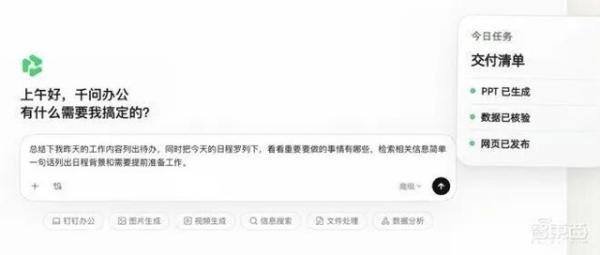 阿里 Agent 线的“三合一” 千问办公并非从零起步。此前阿里内部并行着三条 Agent 产品线——QoderWork、悟空、MuleRun,如今全部收拢整合为“千问办公”一个产品,由钉钉新任 CEO 陈宇森牵头主导。 三线合一的信号很明确:阿里对办公 Agent 赛道的判断不是试水,而是决战。 第三代办公产品的范式迁移 理解千问办公的分量,需要回到办公产品的演进逻辑。


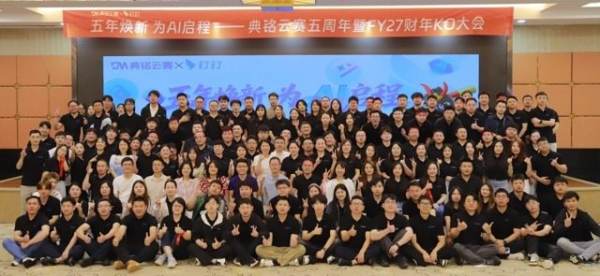 典铭云赛五周年庆,团队 140 多企业数字化专家合影 真正的门槛在“用起来” 千问办公的产品力毋庸置疑,但行业经验反复证明同一件事:强工具到手,不等于企业能用起来。 某制造业 CIO 告诉记者,去年团队满怀期待采购了一套 AI 协作工具,三个月后后台活跃率不到 10%。“工具确实强,但没人知道怎么跟自己的业务结合,没人教怎么改 Agent 的指令,没人能回答我这个行业到底能用它做什么。

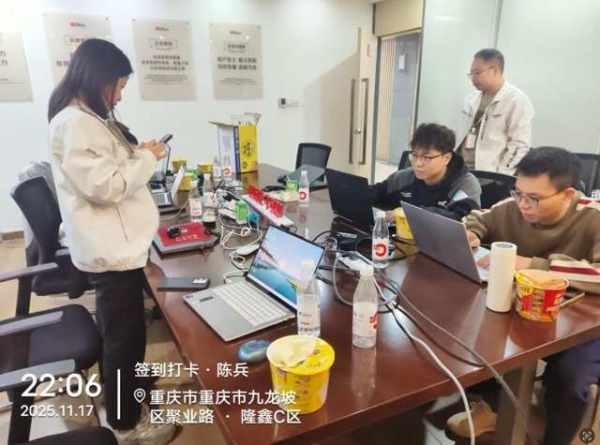 典铭云赛前沿部署工程师团队(FDE)在客户现场深度陪跑 FDE 模式:把工程师派到业务现场 在千问办公的生态中,一批服务商正在承接“最后一公里”的落地工作。其中,典铭云赛作为阿里云旗舰级头部伙伴、钉钉六星级钻石头部服务商,提供的是一种名为 FDE(Forward Deployed Engineer,前沿部署工程师)的服务模式。

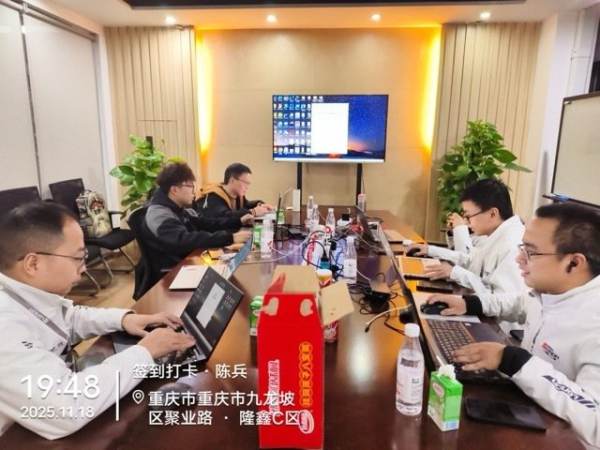 图为:典铭云赛前沿部署工程师团队(FDE)在客户现场调研 落地样本:四家制造企业的 AI 实践 记者了解到,典铭云赛的 FDE 服务已在多家制造业企业落地。
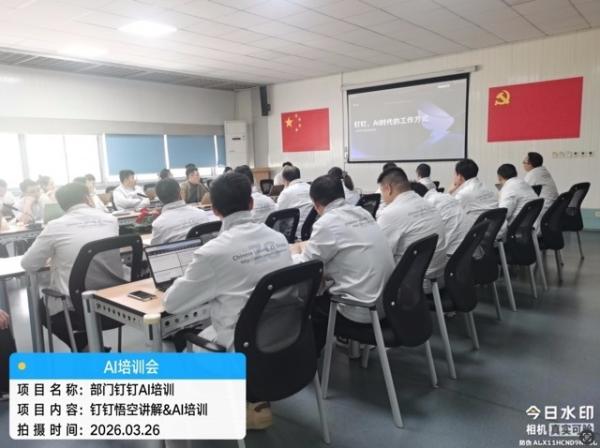 图为:典铭云赛前沿部署工程师团队(FDE)在给客户做 AI 工具的使用培训 某医药制造企业——医药行业对合规和追溯要求极严。典铭云赛为其定制了贴合 GMP 规范的业务流程 Agent,将质量审批、文档管理和生产记录搬上智能协作平台。FDE 工程师长期驻场跟线,深入车间和实验室理解真实场景,确保系统不是“合规摆设”,而是被一线人员日常使用的工作平台。


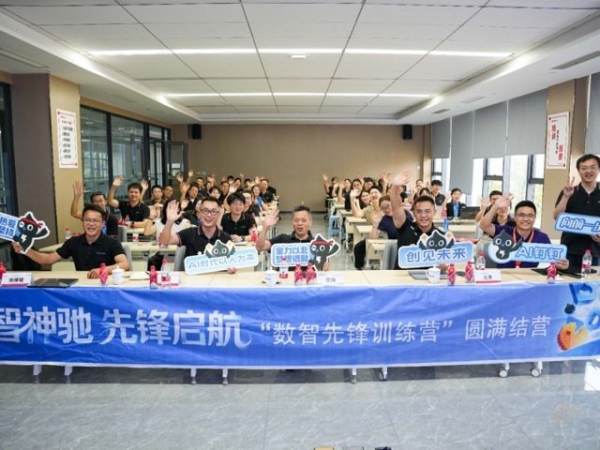 典铭云赛前沿部署工程师团队(FDE)为神驰机电数智先锋训练营提供全程陪跑服务,图为训练营结营仪式。 服务商正在成为 AI 落地的关键变量 千问办公的上线,标志着一个认知转折的开始:每个人打开电脑的第一个念头,会慢慢从“我要用什么工具”变成“我要让谁帮我干这件事”。 这个趋势不可逆。但趋势的红利,只属于真正行动并行动对的人。
 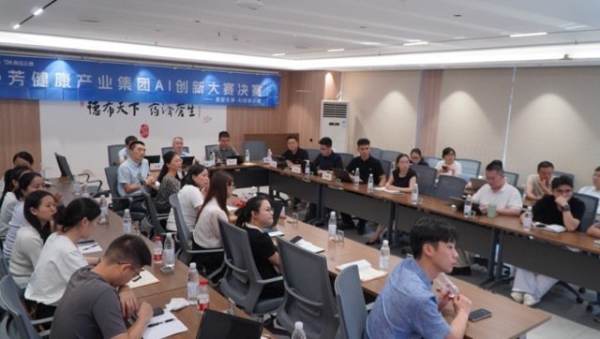 典铭云赛前沿部署工程师团队(FDE)为希尔安药业 AI 创新大赛提供全程陪跑服务,图为大赛总决赛现场。 当产品能力趋于同质化,真正拉开企业AI落地差距的,不再是工具本身,而是有没有人帮你把工具用起来、用对、用深。
 QQ好友和群
 QQ空间
QQ空间 腾讯微博
腾讯微博 腾讯朋友
腾讯朋友 收藏
收藏 支持
支持 反对
反对
 发表于 21:27:28


